Raise pay, cut charges and provide rights to support: report for ADASS sets roadmap for ‘saving social care’

Care worker pay should be raised, charges for services cut and people be provided with clear rights to support as part of a shift to a more personalised, accessible and fair adult social care system, set out today.
However, significant investment and political will are required to realise this ambition from a context of significant unmet need, workforce shortages and lack of choice for people needing care and carers, said the study, commissioned by the Association of Directors of Adult Social Services.
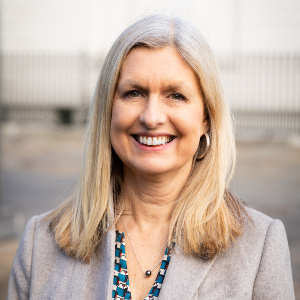
Sarah McClinton, ADASS president from 2022-23
Launching the report today, outgoing ADASS president Sarah McClinton said it came at a time in which the adult care system was “close to breaking point”, with millions “in pain or distress because they aren’t getting the care they need and family and friends picking up the pieces are being pushed to the edge”.
“We’ve been trying to patch-up social care for years, but we’ve run out of road,” said McClinton, director at the London Borough of Greenwich. “We need to act now to save social care. We don’t expect the government to wave a magic wand, but we do need the political will to invest in a long-term plan to ensure good care is available to everyone, everywhere.”
Higher vacancies, waiting lists and reduced provision
The report, by policy consultants Anna Dixon and Kate Jopling, said adult social care faced immense challenges, including a 52% rise in staff vacancies in 2021-22, more people requesting help with fewer receiving long-term care and almost 250,000 waiting for an assessment, as of August 2022.
However, the report stressed that the sector had many strengths, including providing jobs for 1.5m staff, delivering care for a similar number of people, while there was, broadly, a shared vision for its future, set out in a string of previous reports.
This was for a system that was focused on improving wellbeing, personalised to need, preventive, integrated, community-based, value for money, fair and accessible.
The report then set out 10 changes the authors saw as being necessary to achieving this vision, with short-, medium- and long-term actions for each. While long-term changes required government backing and investment, the report said there was much that directors of adult social services could achieve off their own bat in the short-term.
Proposed changes for care system
- Reimagine care and support with people who draw upon it.
- Improve assessment and care planning to put people in the lead.
- Build community capacity for wellbeing and prevention.
- Enable more people to live at home or in a place they call home.
- Improve support for carers.
- Join up care and support to enable people to live fulfilled lives.
- Make care and support accessible and affordable for all.
- Foster diverse and sustainable providers, focused on outcomes.
- Harness the potential of digital technology.
- Redesign and reward the workforce.
The report urged a shift from social care being seen as a service where decisions about provision were made by councils to a support system rooted in rights, where decisions were made by and with people using care and support and their families.
As part of this, the report said assessments and care planning needed to be much less bureaucratic, with people defining the outcomes they wanted to achieve and social workers freed up from excessive paperwork to work directly with people on achieving this.
People should be enabled to direct their support, including by increasing access to individual service funds, while councils should invest in community-based support and in roles, such as local area co-ordinators, that connect people to sources of term.
Universal social care offer urged
Over time, with government investment, there should be “a core universal, non-means-tested and open-to-all offer of care and support
that should be available in all areas”.
Linked to this, the authors said care and support needed to become “accessible and affordable to everyone”, with the costs currently falling “unevenly and unfairly” on those who needed it, leading to unmet need.
While it highlighted work by some councils to reduce care charges, the report said tackling this required government investment over the medium-term to significantly cut the costs of support.
It proposed going beyond the Department of Health and Social Care’s current plans to raise the upper capital threshold, above which people are ineligible for means-tested care, and an £86,000 cap on people’s liability for care, now due for implementation in October 2025.
It said the DHSC should also introduce free care for disabled adults under 30, make charges consistent across local authorities, potentially extend eligibility for free NHS continuing healthcare and, over the longer-term, provide a more universal system of care and support, similar to the NHS.
The report also urged better support for informal carers, so their role was truly voluntary and staff no longer made unreasonable assumptions about their capacity to care, and, over the longer-term, they have a right to paid leave from work and to breaks.
Call to raise pay
In relation to the workforce, it urged a shift to one that was “poorly paid” and felt “undervalued” to one that was “motivated”, which required short-term action to raise remuneration for the lowest paid.
Over the medium term, the study said that a body should be tasked with setting national pay scales for social care roles and, in the long term, pay parity with NHS staff in similar roles, who are currently paid far more.
These pay uplifts should be coupled with national and local workforce plans, with the latter including a focus on improving social work capacity.
Though the report was written independently of ADASS, the association is, broadly, backing the agenda it sets out and will use it as a basis for its lobbying of government.